 PulseMove
How much sitting is “too much”?
Most desk workers rack up the large majority of their waking hours seated — commute, desk, meetings, dinner, couch. Public-health guidance doesn't hand out a magic threshold, but the direction is consistent: prolonged unbroken sitting is the problem, and breaking it up with light activity throughout the day is the fix (WHO, Mayo Clinic). The keyword is unbroken: the three-hour chair marathon is what you're dismantling, not the chair itself.
Why “just stand up more” always fails
Every sit-less resolution dies the same death: it depends on you noticing time passing and choosing movement over momentum, eight-plus times a day, on your busiest days. That's a willpower tax no one keeps paying. Deadlines spike, meetings stack, and by Thursday the resolution is a memory. The pattern to internalize: anything that relies on you remembering will lose to the workday.
The playbook: stack the defaults
- Engineer movement into logistics. Water glass instead of a bottle (more refills), printer and bin far from the desk, phone calls taken standing and pacing.
- Convert one meeting a day. Any 1:1 that doesn't need a screen becomes a walking call. That's 20–30 minutes of movement disguised as work.
- Use transitions. Every context switch — task done, call ended, build running — is a free trigger for a one-minute lap. Transitions already exist; attach walking to them.
- Put one enforced anchor in the middle. Habits 1–3 are opportunistic; they crumble on chaotic days. The anchor is a scheduled movement alarm that fires regardless — every 30–45 minutes, and it doesn't take a tap for an answer.
The anchor, concretely
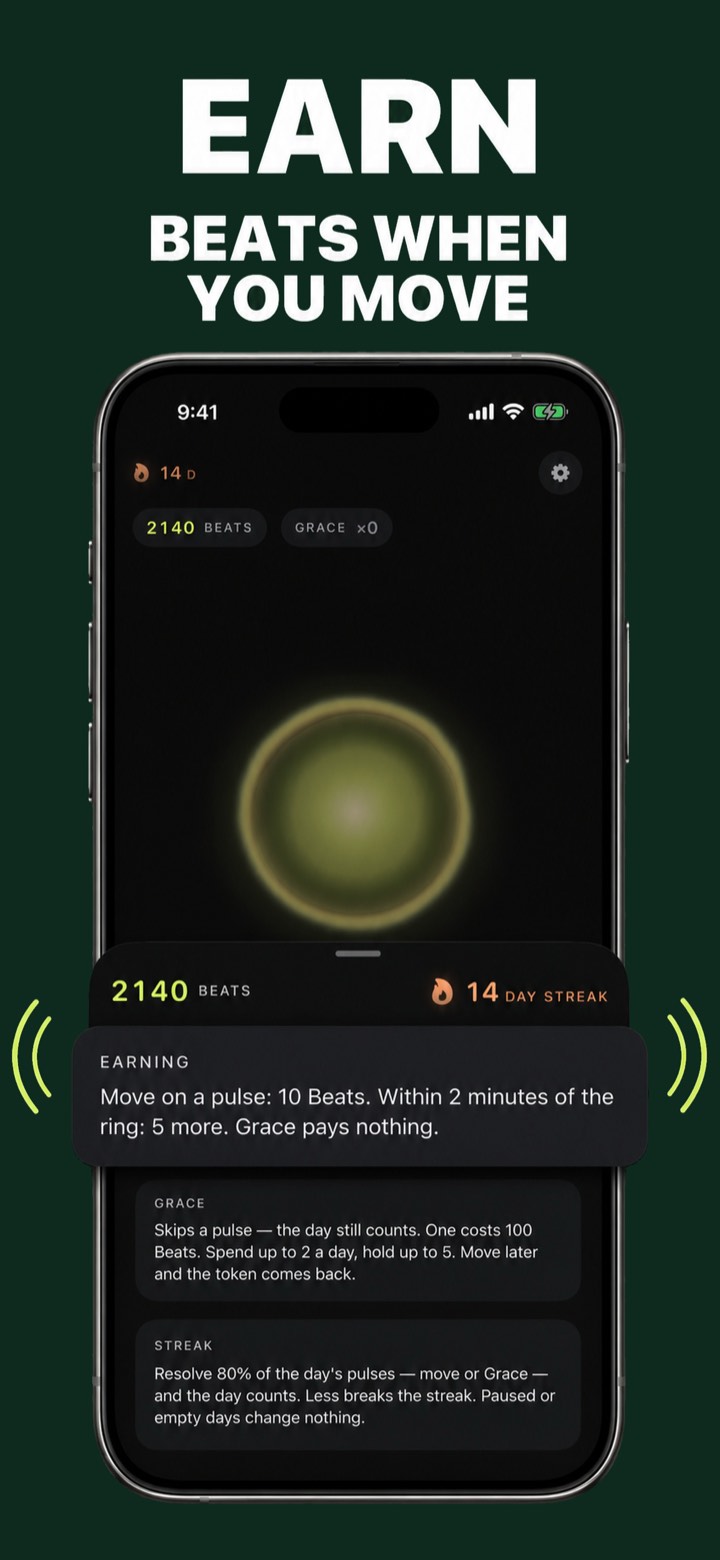
PulseMove is built to be that anchor. It rings a real lock-screen alarm on your cadence and won't go quiet until your phone verifies ~25 steps — so the anchor holds precisely on the days the rest of the playbook collapses. Meetings are skipped via your calendar, driving is detected, and a deliberate pause exists for when life happens. Every answered pulse earns Beats; days where you answer 80% of pulses extend a streak that can't be faked. You're not tracking sitting less — you're proving it.
What a good day looks like
9:00 first pulse — walk to the kitchen, refill the glass. 9:45 pulse lands as you finish a call: lap of the hallway. 10:30 you're mid-flow, spend a Grace token, keep shipping. 11:15 walk. Lunch. Two afternoon meetings — silence, the calendar has you covered. 15:30, 16:15, 17:00: three more short walks, one within two minutes of the ring for bonus Beats. Total cost: maybe twelve minutes. Total sitting blocks over 90 minutes: zero.
Sit less, starting tomorrow morning
Set your window and cadence tonight; from tomorrow, PulseMove enforces the anchor habit for you. 3-day free trial on the annual plan.
Get PulseMove — free trial