 PulseMove
Where the numbers come from
Three strands of guidance point the same direction:
- Ergonomics research — Cornell University's ergonomics group popularised the sit-stand-move cycle behind the 20/8/2 rule, finding frequent short position changes beat occasional long breaks (Cornell CUErgo).
- Public-health guidance — the WHO's physical-activity guidance is blunt: sit less, move more, and any movement counts (WHO fact sheet).
- Clinical commentary — Mayo Clinic's overview of sitting risk suggests breaking up long sitting with light activity throughout the day (Mayo Clinic).
Exact prescriptions vary by study, and none of this is personal medical advice — but the direction is unambiguous: frequency beats duration. Six two-minute walks spread across the day do more for stiffness and alertness than one heroic gym session bolted onto nine motionless hours.
Knowing the number was never the problem
Be honest: you could have guessed “every 30 minutes.” The gap isn't knowledge — it's that at minute 30 you're mid-email, mid-meeting or mid-flow, and the intention silently rolls over to “after this.” Repeat that eight times and you've sat for four hours. Calendar chaos and deep focus are precisely the conditions under which gentle reminders fail.
Turning the rule into a schedule
Translate the guidance into a cadence you can actually run:
| Your desk day | Suggested cadence | Movement per day |
|---|---|---|
| Under 4 hours seated | Every 60 min | ~6 short walks |
| 4–6 hours | Every 50 min | ~7 short walks |
| 6–8 hours | Every 45 min | ~9 short walks |
| 8+ hours | Every 40 min | ~11 short walks |
Strict 30-minute intervals are the research ideal; the cadences above are the sustainable version most desk workers can keep for months, not days. Start there and tighten later.
Enforce it without thinking about it
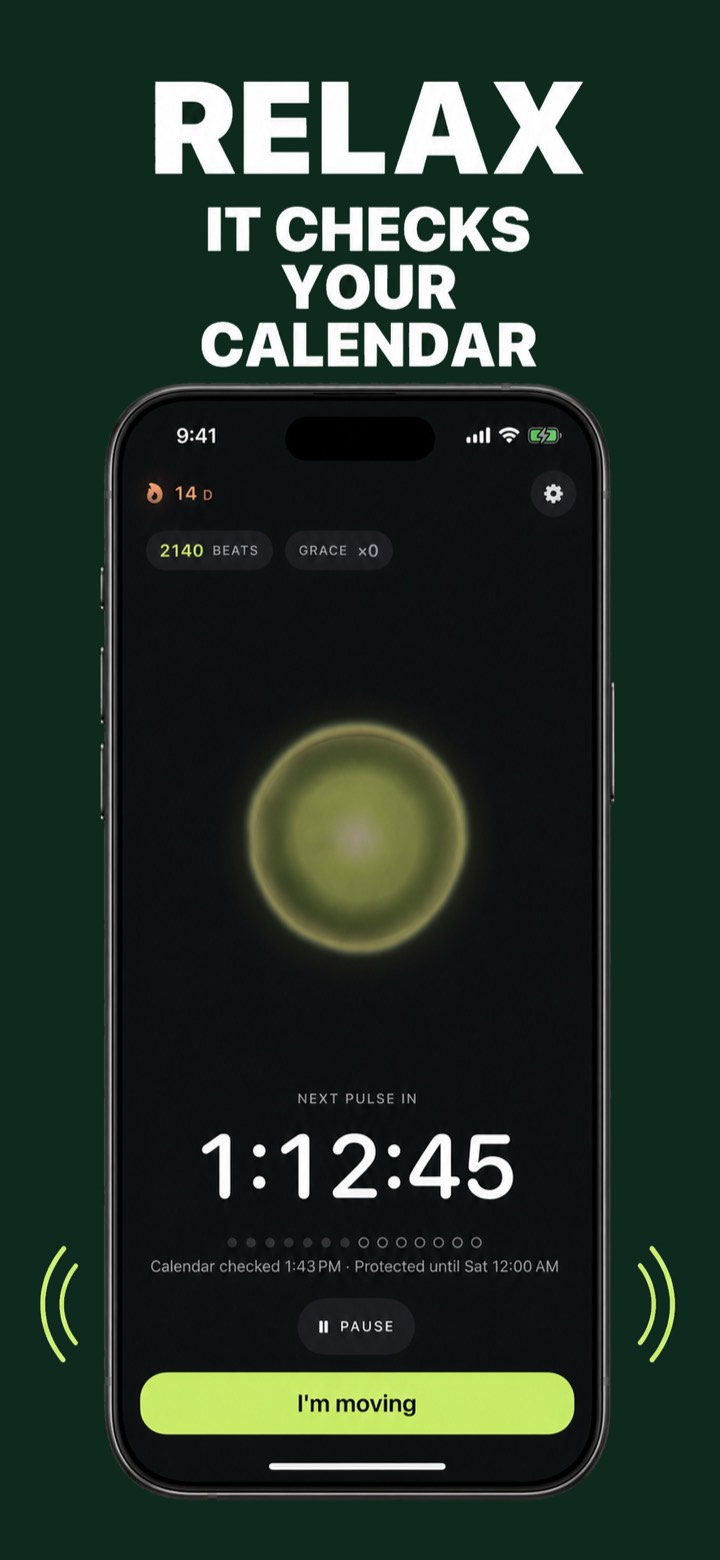
This is exactly what PulseMove automates: you set the window and cadence once, and every interval fires a real lock-screen alarm that only goes quiet after ~25 verified steps. Meetings are skipped automatically via your calendar, driving is detected, and each answered pulse builds a streak that only counts honest days. The 30-minute rule stops being a fact you know and becomes a thing that happens.
Make “every 30 minutes” automatic
PulseMove turns the research guideline into a rung alarm you answer with your feet. Set the cadence once — free for 3 days.
Get PulseMove — free trial