 PulseMove
Why walking is the perfect dismissal
Alarm designers discovered something powerful: the best dismissal task isn't a math problem or a memory game — it's locomotion. Walking can't be done from under a blanket or slumped in a chair. It forces posture change, blood flow, and a physical break from wherever you were stuck. And a pedometer is hard to argue with: either the steps happened or they didn't. Shaking the phone doesn't fool modern step detection.
The morning apps proved it converts
A whole category exists for waking up this way: mission alarms that demand steps, squats or a photo of your bathroom sink before going quiet. TechCrunch covered the newest wave of task-to-dismiss alarms, and step-based dismissal is consistently the flagship mission. People pay for these apps for one reason: the mechanic works when willpower doesn't.
The gap: your alarm clock retires at 8am
Here's the odd part. The hours when you're most immobile aren't in bed — they're at your desk. Desk workers routinely sit through three, four, five hours without a single real break. Yet every walk-to-dismiss alarm on the market clocks out after breakfast. The one tool proven to move an unwilling human… doesn't show up for the 9-to-6 stretch where you need it most.
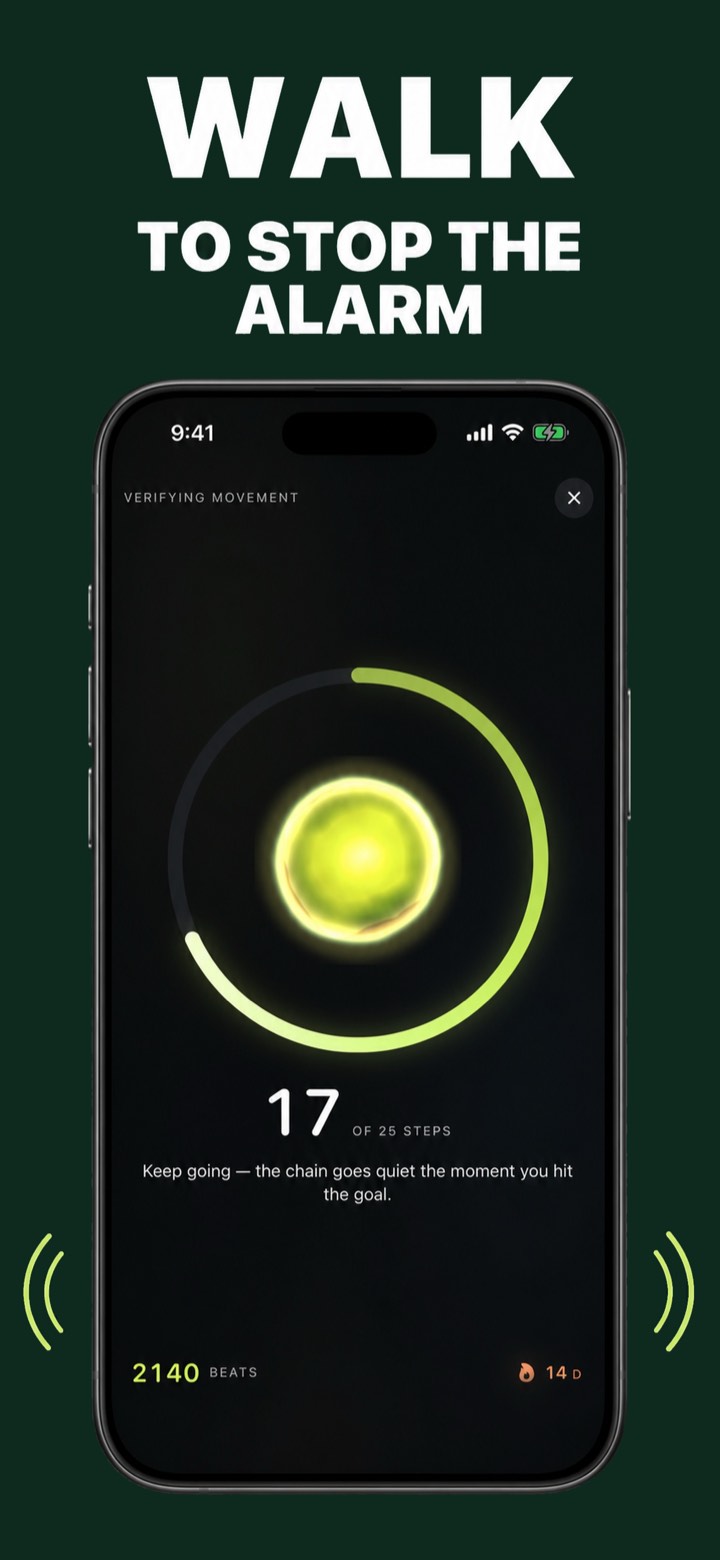
PulseMove: walk-to-dismiss for the whole workday
PulseMove takes the mechanic that gets heavy sleepers out of bed and runs it on a schedule you choose:
- Pulses, not one alarm. Every 30–60 minutes across your work window, a pulse fires as a real lock-screen alarm.
- ~25 steps to silence it. Counted on-device by your phone. Move within two minutes of the ring and you earn bonus Beats.
- It re-rings until you do. Snoozing just postpones the same demand. The alarm keeps its promise.
- It knows when not to ring. Calendar meetings are skipped automatically, and driving detection holds pulses in the car — strictness only where it belongs.
Morning alarm vs. movement alarm
| Morning walk-to-dismiss | PulseMove | |
|---|---|---|
| Fires | Once, at wake-up | On your cadence, all workday |
| Dismissal | Walk N steps | Walk ~25 verified steps |
| If ignored | Re-rings | Re-rings every minute |
| Context | None needed | Skips meetings, holds while driving |
| Progress | — | Beats economy + honest streak |
Your morning alarm has a day job now
PulseMove is the alarm that makes you walk — every 30–60 minutes, on your schedule, verified by your steps. Try it free for 3 days.
Get PulseMove — free trial